The exciting discovery of a lost world
How was one of the most important sites of antiquity lost? Which people dedicated their lives to its search? And what secrets does the land of Olympia still hide? A journey through the history of discoveries, where archaeology seems like a real adventure.
Imagine walking in a quiet valley of the Peloponnese, among trees, rivers and cultivated lands.
A peaceful landscape spreads out around you. Nothing betrays that just a few meters below your feet lie the remains of one of the most important sites of the ancient world.
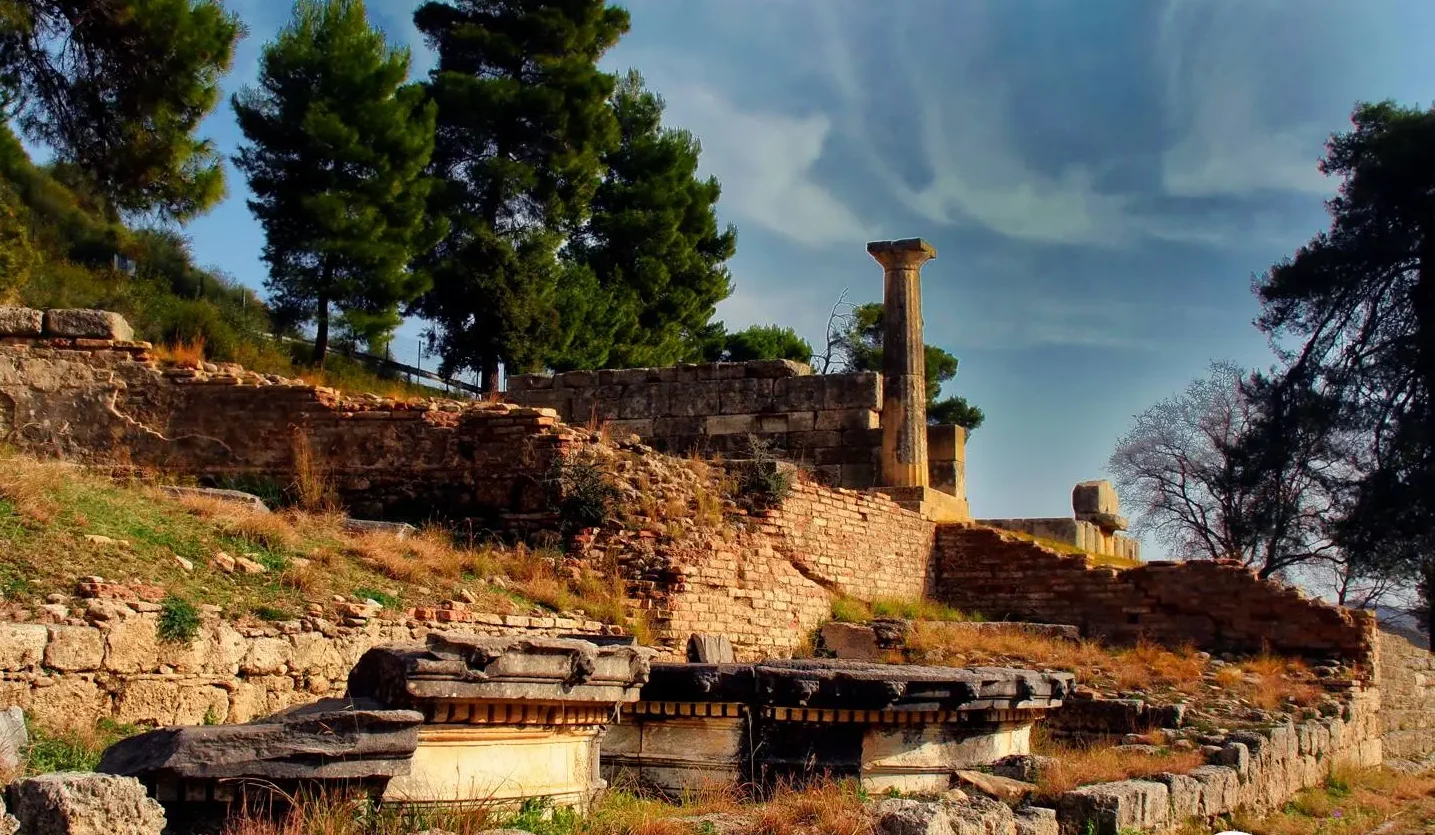
Somewhere there, under layers of soil and sand, lies the great temple of Zeus.
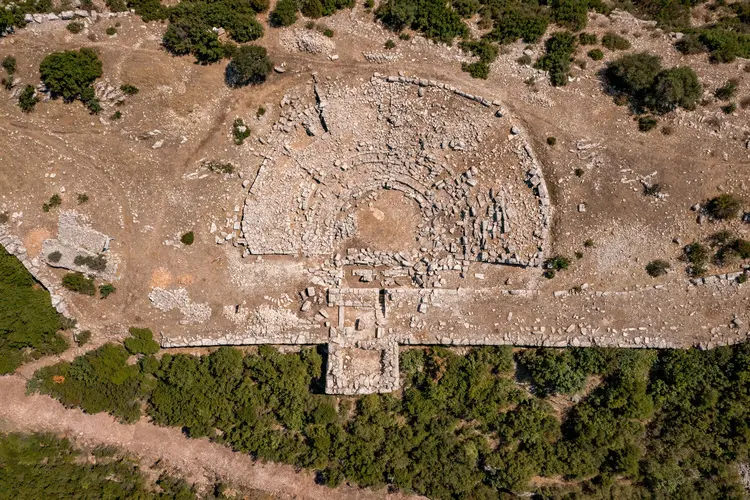
Next door, the ancient stadium where thousands of spectators watched the Olympic Games.
And a little further on, buildings, statues, inscriptions and objects that tell the story of more than a thousand years of history.
This was the challenge faced by the first people who attempted to discover Ancient Olympia.
A challenge that evolved into one of Greece's greatest archaeological adventures.
Today, the Museum of the History of the Excavations of Olympia invites us to discover this amazing story.
Not through the famous statues that we all recognize, but through old photographs, rare books, historical maps, archaeological tools, and personal testimonies of the people who brought an entire world back to light.
And believe us: the story of the discovery of Olympia is almost as fascinating as its antiquity itself!
How was Ancient Olympia lost?
For more than a thousand years, Olympia was one of the most important religious and sporting centers of the Greek world.
The Olympic Games were held here in honor of Zeus.
Here stood the colossal gold and ivory statue of the god, a creation of Phidias and one of the Seven Wonders of the Ancient World.
Athletes, philosophers, artists and visitors from different regions of the Greek world gathered here.
So how did such a great place end up disappearing from the landscape?
Nature covered what man created
The decline of ancient Olympia was associated with the great religious, political and social changes of late antiquity.
The fighting stopped, the Sanctuary was gradually abandoned and the once imposing monuments began to be destroyed.
Strong earthquakes during the 6th century AD contributed to the collapse of many buildings.
But nature played another decisive role.
Olympia is located between the rivers Alpheios and Kladeos.
Over the centuries, natural processes and the accumulation of river sediments covered much of the ancient remains with layers of soil, sand and mud.
Gradually, the imposing monuments disappeared beneath the surface of the ground.
A place of global renown had been transformed into an archaeological mystery.
But his name had not been forgotten.
It survived through the descriptions of ancient writers, particularly Pausanias, who visited Olympia in the 2nd century AD.
And centuries later, these descriptions would help researchers search for the lost place.
The first explorers – When Olympia was still a mystery
Long before major excavations began, European travelers, scholars, and antiquarians traveled to the Peloponnese in search of traces of antiquity.
They studied ancient texts, observed the landscape, drew maps and tried to match the ruins with the descriptions of historians.
They didn't have satellite images.
They did not have georadar or modern tracking systems.
But they had something equally important: curiosity, perseverance, and the desire to understand the world that had come before.
A rare book from 1824 hides a different Olympia
Among the special exhibits of the Museum of the History of Excavations is a rare edition of the English traveler John Spencer Stanhope.
The book was published in 1824 and is titled:
Olympia? or, Topography illustrative of the actual state of the Plain of Olympia, and of the Ruins of the City of Elis.
This is a historical record of the topography of the area, at a time when Olympia had not yet been systematically excavated.
Think how rare this testimony is!
A book that presents Olympia as it was seen by travelers before its most important monuments were revealed.
Before the great columns of the temple of Zeus reappear.
Before the discovery of Praxiteles' Hermes.
Before the valley was transformed into the world-famous archaeological site we visit today.
This book is not just an old edition.
It is a window into a lost image of Ilia.
1829: French archaeologists discover the first great secrets
Many believe that the excavations of Olympia were started by German archaeologists.
But the story has a lesser-known side.
The first significant excavations at the Temple of Zeus were carried out in 1829 by French researchers.
At that time, Greece was in the early years of its independence.
The French Scientific Mission of the Morea carried out research in the Peloponnese, recording its history, geography and archaeological monuments.
A team of researchers, including architect Abel Blouet, carried out excavations at the Temple of Zeus.
The work took relatively little time, but it led to important discoveries.
Among the finds were parts of the temple's famous sculptural decoration.
And here the story takes an unexpected turn.
The secret of Olympia that is currently in the Louvre!
Did you know that original sculptures from the Temple of Zeus in Ancient Olympia are currently housed in the Louvre Museum in Paris?
Some of the sculptures discovered during the French expedition were taken to France.
Among them are parts of the metopes of the temple of Zeus, which depicted the labors of Hercules.
A typical example is the representation of Hercules with the Stymphalian Birds.
Today, parts of it are kept in the Louvre.
According to the official catalog of the French museum, these finds were discovered in Olympia in 1829 and arrived in France in 1830, recorded as a donation from the Greek government.
An amazing historical connection between Ilia and one of the most famous museums in the world!
The history of Olympia goes beyond the borders of Greece. Its traces are scattered throughout the world.
1875: The great excavation that forever changed the image of Olympia
In 1875, one of the most important chapters of Greek archaeology began.
Following an agreement between Greece and the German side, the first major, systematic excavation of the Sanctuary of Zeus begins.
A central figure in the preparation and promotion of the project was the German archaeologist Ernst Curtius.
The excavation was a huge scientific and organizational undertaking by the standards of the time.
It required funding, equipment, transportation, manpower, and close cooperation with the Greek authorities.
Greek workers, German scientists and a common discovery
In historical photographs of the first excavations, we see archaeologists, architects, and dozens of workers working among huge stones and half-buried architectural members.
Many of the workers were locals.
People from the area who participated daily in the difficult task of uncovering the Sanctuary.
With picks, shovels, and simple tools, they removed enormous amounts of soil.
Behind every great archaeological find were countless hours of hard work.
And this is something we often forget.
The discovery of Olympia was not only the success of famous scientists. It was also the result of the work of people from the Greek land, whose names are rarely mentioned in books.
The discovery of Hermes – A moment that shocked the world of archaeology
In 1877, during German excavations, archaeologists brought to light one of the greatest works of ancient Greek art.
The famous Hermes with little Dionysus, known as the Hermes of Praxiteles.
The statue was found in the temple of Hera.
The discovery was extremely important, as the ancient traveler Pausanias had described a similar project in the same area.
For archaeologists, the connection of the discovery with ancient written evidence was striking.
Imagine that moment.
Workers carefully remove the soil.
Gradually, a marble human figure appears.
And a work that remained hidden for centuries is beginning to be revealed again.
Today, Hermes is perhaps the most famous exhibit of the Archaeological Museum of Olympia.
But the story of its discovery belongs to an equally fascinating side of archaeology.
The effort of people to reconstruct a world that had been lost.
The photos that reveal an Olympia that no longer exists
One of the most important elements of the Museum of the History of Excavations is its photographic material.
Its halls display historical photographs of the excavation work.
Images from an era without modern machinery.
Without computers.
Without the technologies that archaeologists use today.
Yet, 19th-century researchers had already understood how important it was to accurately record what they discovered.
An innovative use of photography
The great excavation of Olympia was one of the important projects of the era in the utilization of photographic documentation.
The photos weren't just taken as souvenirs.
They were scientific evidence.
They recorded the location of the finds, the condition of the monuments and the progress of the work.
Today, these images allow scientists to mentally return to the early days of excavations.
And they offer visitors something truly unique.
The opportunity to see Olympia at the moment it was being reborn from the soil.
The historic agreement between Greece and Germany – When archaeology became an international collaboration
Among the museum's exhibits is material related to the historical agreement that allowed for the major German excavations.
This is a lesser-known aspect of Olympia's history.
The excavations didn't start simply because some scientists decided to dig.
Diplomatic negotiations, understandings between governments, and agreements for the management of the finds were needed.
Systematic excavation began in 1875 and the first major period of work was completed in 1881.
During its duration, a significant part of the Sanctuary was revealed.
Among the monuments studied were the temple of Zeus, the Heraion and other buildings of Altes, the sacred core of Olympia.
This archaeological collaboration created a scientific tradition that continues to this day.
And it reminds us that protecting cultural heritage can unite people from different countries around a common cause.
A rare model reveals how archaeologists imagined ancient Olympia
One of the museum's most special exhibits is an old model of the Sanctuary of Olympia.
It was built by H. Schleif, according to a design by archaeologist and architect Wilhelm Dörpfeld.
The model presents a reconstruction of the ancient Sanctuary.
But its real value is deeper.
Why is an old model so important?
Because it allows us to see how archaeologists of a previous era interpreted what they had discovered.
Every excavation reveals elements of the past.
But it doesn't always give all the answers.
Scientists need to combine architectural remains, historical evidence, and individual findings in order to reconstruct the original image of a space.
And as discoveries continue, some of these interpretations may change.
Thus, the model is not simply a representation of ancient Olympia.
It is a historical document of the way in which archaeological knowledge itself evolves.
Archaeologists' Tools – Humble Objects Behind Great Discoveries
The museum also displays old excavation tools, instruments and documents used during the research.
They may not have the impressive appearance of an ancient statue.
But they have a special historical significance.
Think about how many discoveries started with a simple tool.
How many hours did it take someone to carefully remove the soil around a find?
How many times did archaeologists have to stop, observe, and reexamine what they saw?
Archaeology is not just the moment of great discovery.
It is patience that comes first.
The observation.
The recording.
The attempt to understand exactly what was found and what story it can tell.
And these small objects bring us closer to the everyday life of the people who dedicated their lives to this effort.
Olympia continues to reveal secrets – The discovery with Homer's verses
Perhaps the most fascinating aspect of the excavation story is that it is not complete.
The land of Olympia still holds surprises.
In 2018, the Ministry of Culture announced an extremely important discovery that had been made during geoarchaeological research in the wider area of the Sanctuary.
A clay tablet with thirteen verses from Homer's Odyssey!
The lyrics come from the rhapsody ξ, in which Odysseus meets his faithful swineherd, Eumaeus.
The find was tentatively dated to the Roman era.
The discovery aroused particular scientific interest, as it is a rare case of a Homeric text engraved on a clay tablet.
Why is this discovery so important?
Because it reveals to us how deeply the Homeric tradition had spread in the ancient Greek and Roman world.
The stories of Odysseus were not just literary works.
They were part of a common cultural heritage that was passed down from generation to generation.
And centuries later, a small piece of clay allowed modern scientists to rediscover Homer's verses.
It is worth noting that this particular slab is a find of the broader archaeological research in Olympia and not a confirmed exhibit of the Museum of the History of Excavations.
Its history, however, proves that the search for the past continues.
The biggest secret: Ancient Olympia may be even older than we know!
What if we told you that, despite excavations that have been taking place for about 150 years, Olympia has not been fully revealed?
This is exactly what modern scientific research supports.
Archaeologists know that much of the ancient remains lie beneath thick layers of sediment.
The natural processes that covered the Sanctuary centuries ago still make research difficult.
But today scientists have technologies that the first excavators could not even imagine.
From the pickaxe and shovel to modern technology
Geophysical surveys, 3D imaging technologies, LiDAR systems and modern digital tools allow scientists to study the subsurface without always having to carry out excavations.
Newer research indicates that the Sanctuary and its facilities probably extended over a larger area than what we know today.
Some sections remain unexplored.
What could still be hiding under the soil?
Unknown buildings?
Architectural remains?
Objects that will complete the picture of daily life in the Sanctuary?
No one can know for sure.
And this is precisely the magic of archaeology.
Each new investigation can add another piece to the great puzzle of history.
Perhaps the most important discoveries of Olympia do not belong only to the past. Perhaps some still await us in the future.
The small museum that hides a huge history
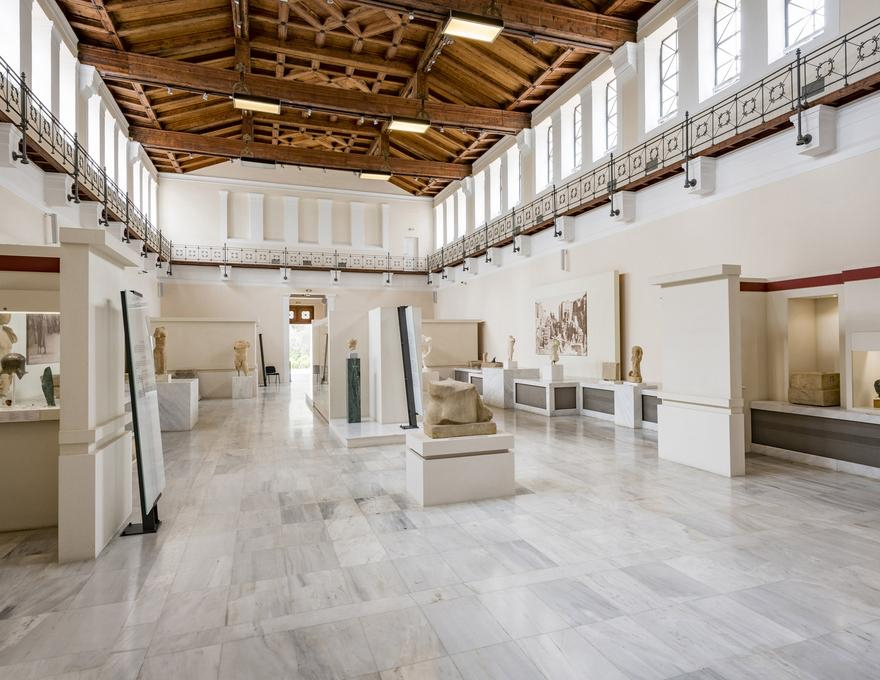
The Museum of the History of Excavations is housed in the so-called Old Ephorate, a small ground-floor building constructed in the early 20th century.
It is located next to the Museum of the History of the Ancient Olympic Games.
The building had been used in the past for the needs of the archaeological service and as a residence for Greek archaeologists.
In 2004 it gained new life as a museum dedicated to the history of excavations.
Its halls display historical photographs, drawings, documents, tools and rare publications.
It is not a museum of impressive size.
But it is a space that reveals something deeper.
Behind every archaeological monument there is a second story: the story of the people who discovered it.
And this story is worth telling.
A visit that will make you see Olympia with different eyes
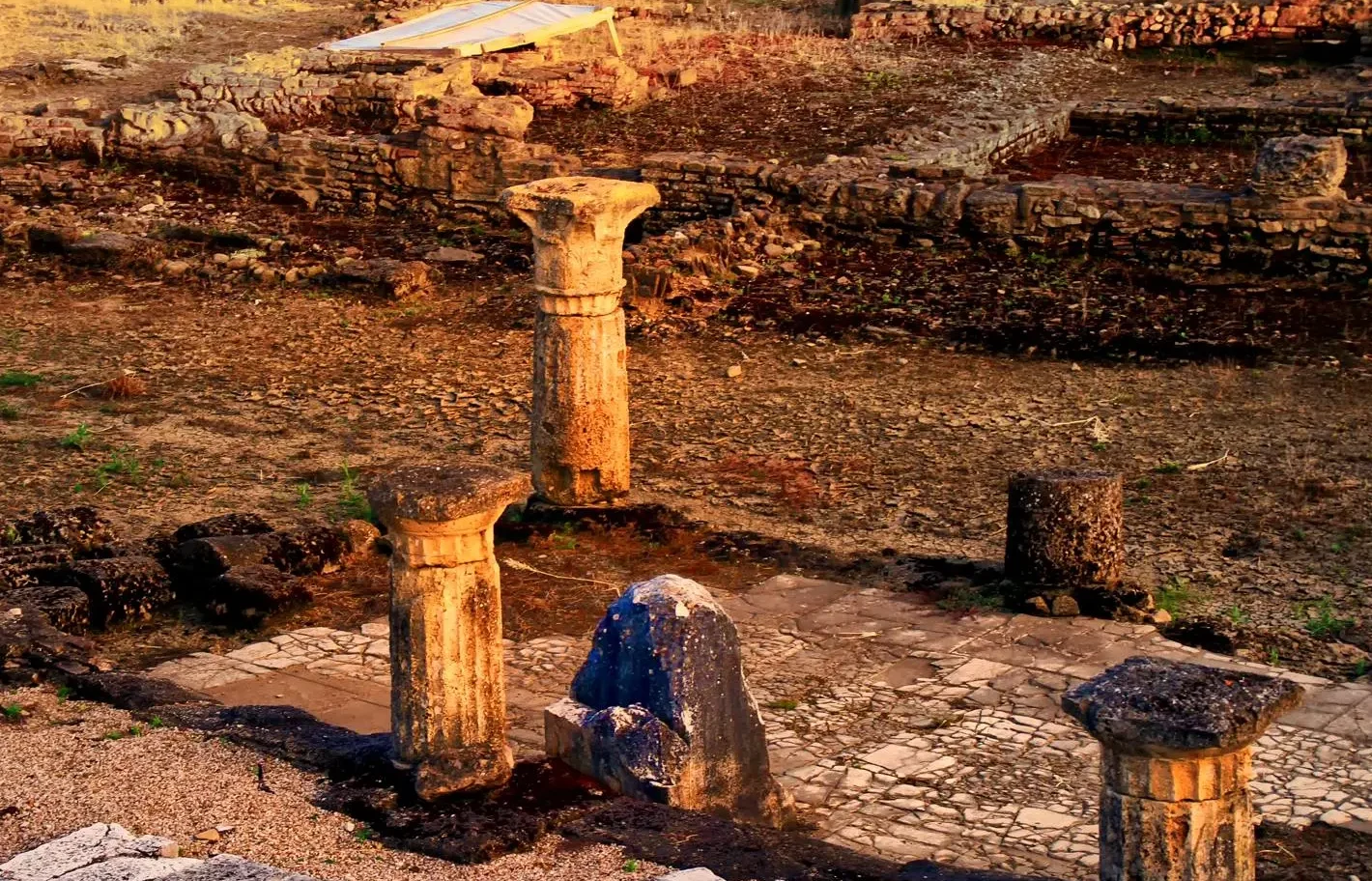
When we walk through the archaeological site of Olympia today, we see the ancient monuments clean, organized, and accessible.
It's easy to forget that none of this was self-evident.
It took generations of scientists, workers, research missions, and countless hours of work to uncover the space.
It took people who believed that knowledge of the past was worth every effort.
And thanks to them, today we can walk where the ancient Greeks once stood.
My little advice
If you are planning to visit Ancient Olympia, try to get to know this lesser-known museum.
Look at the old photos.
See what the place looked like before the excavations.
He searched for the rare 1824 edition and the model of the ancient Sanctuary.
Then, visit the archaeological site.
You will find that the experience is different when you know not only what existed in antiquity, but also how difficult it was to rediscover it.
Because history is not only found in what the ancients left behind. It is also found in the human effort to preserve it.
Useful information for your visit
Where is it located: In Ancient Olympia, next to the Museum of the History of the Olympic Games of Antiquity.
Building: Old Ephorate of Olympia.
What will you discover: Historical photographs of the excavations, old maps and engravings, excavation tools, the model of the Sanctuary, historical documents and a rare edition from 1824.
Recommended visit time: Approximately 20–40 minutes.
Important information: The visit takes place after consultation with the staff of the neighboring Museum of the History of the Olympic Games of Antiquity.
Ticket: Access is included in the single ticket to the archaeological sites and museums of Ancient Olympia.
Official update: Ministry of Culture – Museum of the History of the Excavations of Olympia.
Discover more stories from Ancient Olympia
The adventure of the story doesn't end here!
In Archaeological Museum of Olympia You will get to know the treasures that the excavations brought to light: the Hermes of Praxiteles, the Victory of Paeonios, the helmet of Miltiades and the cup of Phidias.
In Olympic Games History Museum of Antiquity You will travel to the world of ancient athletes, great winners and the traditions that gave birth to Olympism.
And in Museum of Modern Olympic Games You will discover how an ancient Greek ideal came back to life and evolved into a global institution.
Four museums. Four different stories. A place with an inexhaustible cultural heritage.
Ancient Olympia is waiting for you to discover its secrets.
And the most exciting thing?
Some of these may not have been revealed yet.